

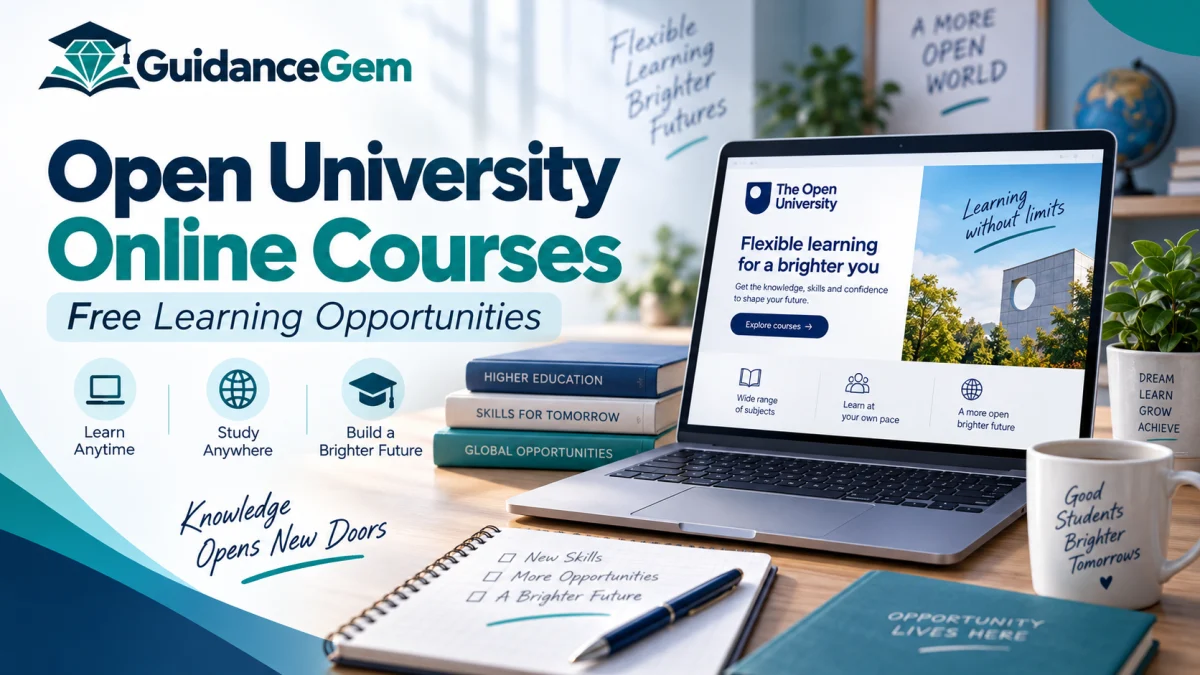
Open University Online Courses give learners around the world a flexible way to study through OpenLearn, the free learning platform from The Open University. The catalogue covers subjects from education, health and society to science, technology, languages, business and the arts. Learners can study online without paying a course fee and can choose material at different levels. The Open University Online Courses catalogue is evergreen rather than tied to one annual application cycle.
OpenLearn lets visitors browse course content freely, while creating a free account unlocks enrolment, progress tracking and recognition features. Account holders who complete a course receive a free Statement of participation, and courses that offer a digital badge can award that badge as well. These records are useful for documenting informal learning, but they should not be described as a formal university degree or academic credit. There is no single application deadline for the overall catalogue.
Open University Online Courses Details
The Open University operates OpenLearn as an online public-learning platform with a large catalogue of free courses. Courses vary in level, length, format and assessment style, so learners should read the individual course page before enrolling. The official catalogue currently lists hundreds of free learning options across broad subject areas. Courses range from about 1 hour to 24+ hours, and many materials can be downloaded in accessible formats such as Word, PDF and ePub.
Open University Online Courses are designed for flexible access rather than a competitive scholarship selection. A free OpenLearn account is optional if you only want to read much of the content. You need an account to enrol, track progress, collect Statements of participation or earn an available badge. Individual courses may have their own recommended study time and learning outcomes.
Host | The Open University |
|---|---|
Platform | OpenLearn |
Mode | Online and self-paced |
Cost | Free |
Recognition | Statement of participation; digital badge on eligible courses |
Deadline | No single closing date |
Stay Updated with Guidance Gem
Follow Guidance Gem for new scholarships, fellowships, internships and global opportunities.
Open University Online Courses Benefits
These free courses remove the course-fee barrier for learners who want structured self-study. The main benefit is flexible access: users can choose a subject, work through course materials online and fit the study around employment, university or other commitments. The breadth of the catalogue also makes it possible to sample a field before committing to a paid qualification.
Recognition depends on the course. OpenLearn confirms that account holders who complete a course receive a free Statement of participation, while a digital badge is available only when that specific course offers one. Learners should therefore check the course page instead of assuming that every course provides a certificate, badge or formal credit.
Also Check: Stanford University Courses Online for another online-learning option already covered on Guidance Gem.
Open University Online Courses Eligibility
The general OpenLearn catalogue does not use a competitive nationality, age or degree-based admissions process for the general free catalogue. Most learners can browse and enrol online, but a course can still state assumed knowledge, accessibility notes or recommended preparation. Read the course description carefully if you are choosing advanced material.
Because the platform is online, learners need a reliable internet connection and a device capable of opening the course materials. English ability should be sufficient for the selected course unless the course itself says otherwise. There is no general IELTS, application fee or scholarship nomination requirement for the free OpenLearn catalogue.
What You Need to Start
You do not normally need to prepare a scholarship-style document package before starting. Create a free OpenLearn account if you want enrolment and progress features, then keep your account details available so your learning record can be saved. Some activities may ask you to submit answers or complete quizzes inside the course.
If your goal is to use learning evidence for a CV or portfolio, verify the recognition offered by the specific course before you start. Save the Statement of participation or digital badge after successful completion where available. These documents show participation in OpenLearn learning but do not convert the course into a formal Open University degree award.
How to Enrol
Open the official OpenLearn free-course catalogue, filter or search for a subject, and open the course page that best matches your goal. Review the course level, estimated study time, learning outcomes and recognition details. You can then create or sign in to an OpenLearn account and enrol without paying a course fee.
Work through the units at the pace allowed by the course and use the progress tools to keep track of completed material. When a course is complete, check your OpenLearn profile for the Statement of participation and any digital badge offered by that course. Use the official course page as the final source for course-specific requirements.
Course Access and Deadlines
The free-course catalogue does not have one universal closing date. Many OpenLearn courses are available on an ongoing basis, which makes the platform suitable for learners who need flexible start times. A particular course can still be updated, retired or replaced, so confirm that it is currently open before planning your study schedule.
Guidance Gem treats this as an evergreen learning opportunity rather than inventing a yearly deadline. If a discovery article attaches a year to the catalogue, the official OpenLearn page still takes priority for live availability. Start dates and completion expectations should come from the individual course page.
Frequently Asked Questions
These answers clarify the most common questions about recognition and course status. The official OpenLearn course page should always be checked before you claim a specific credential. Different courses can offer different completion features.
The platform is free to use for the course material covered by OpenLearn, but it is separate from formal fee-paying Open University qualifications. Learners should distinguish a free course from a credit-bearing module. That distinction matters when describing the learning to employers or universities.
Do all OpenLearn courses provide a certificate?
No. OpenLearn states that account holders who complete a course receive a free Statement of participation, and a digital badge is available when that course offers one. The official page does not say that every free course awards a formal certificate.
Are the courses part of a formal Open University degree?
No. OpenLearn free courses can support skills development and informal learning, but they do not automatically count toward a formal Open University degree or academic credit. Check any linked qualification separately if you need credit-bearing study.
Conclusion
Open University Online Courses are useful for learners who want flexible, no-fee access to structured educational material without waiting for a scholarship cycle. The platform is especially practical for exploring a new subject, refreshing professional knowledge or building a documented learning record through a Statement of participation.
Before enrolling, choose a course that matches your level and verify exactly what recognition it offers. Open University Online Courses should be presented accurately as OpenLearn learning rather than as a guaranteed formal certificate program. Use the official catalogue for the latest course availability and terms.

